|
|
|
|
|

|
Wanted item
Kolibri was a car-phone intercept receiver developed by the
Politie Verbindingsdienst PVD (Police Signals Service)
in The Netherlands in the early 1990s.
It was intended for the interception of conversations on
the Dutch 400 MHz NMT cellular network, known as ATF-2.
Kolibri is Dutch for Hummingbird.
|
The analogue NMT network operated at approx. 400 MHz, with the frequencies
of the base station and the mobile phone 10 MHz apart.
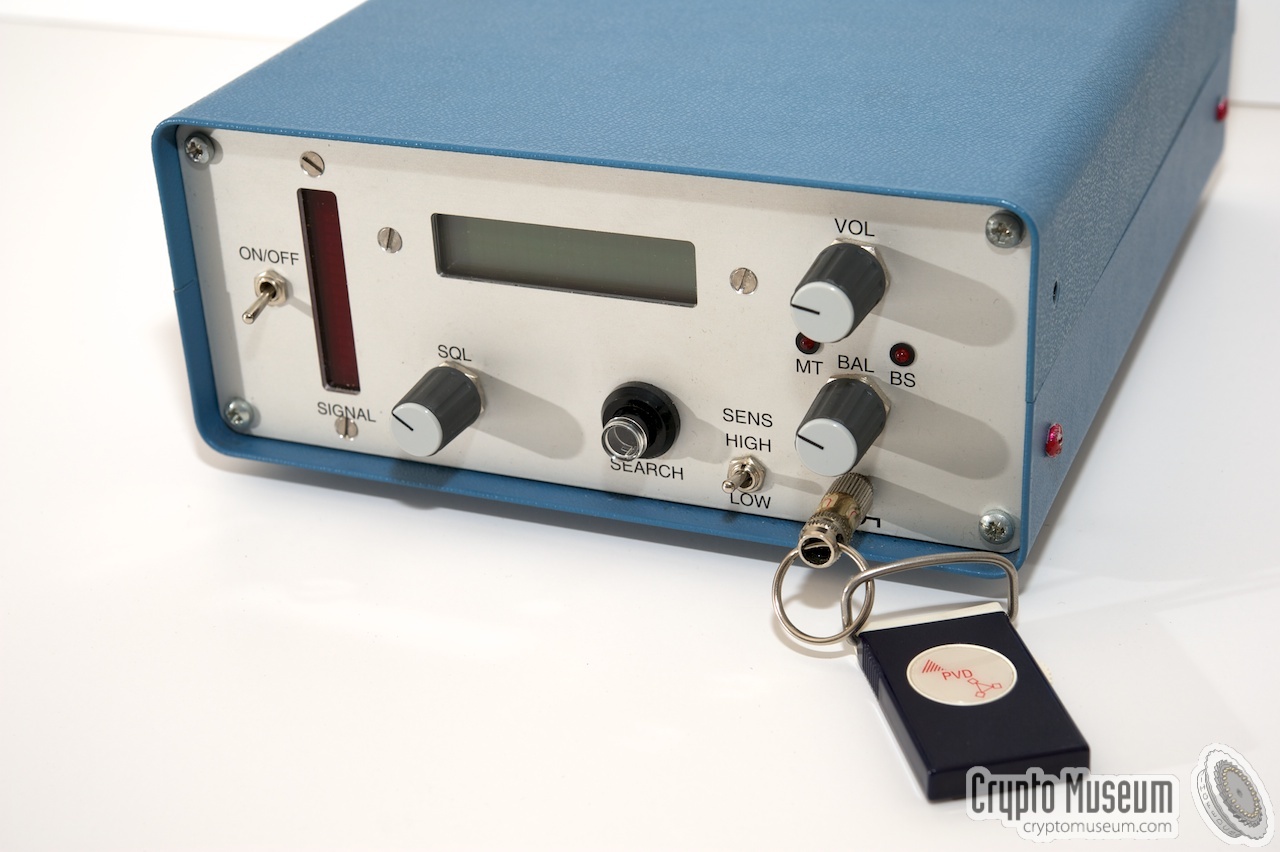
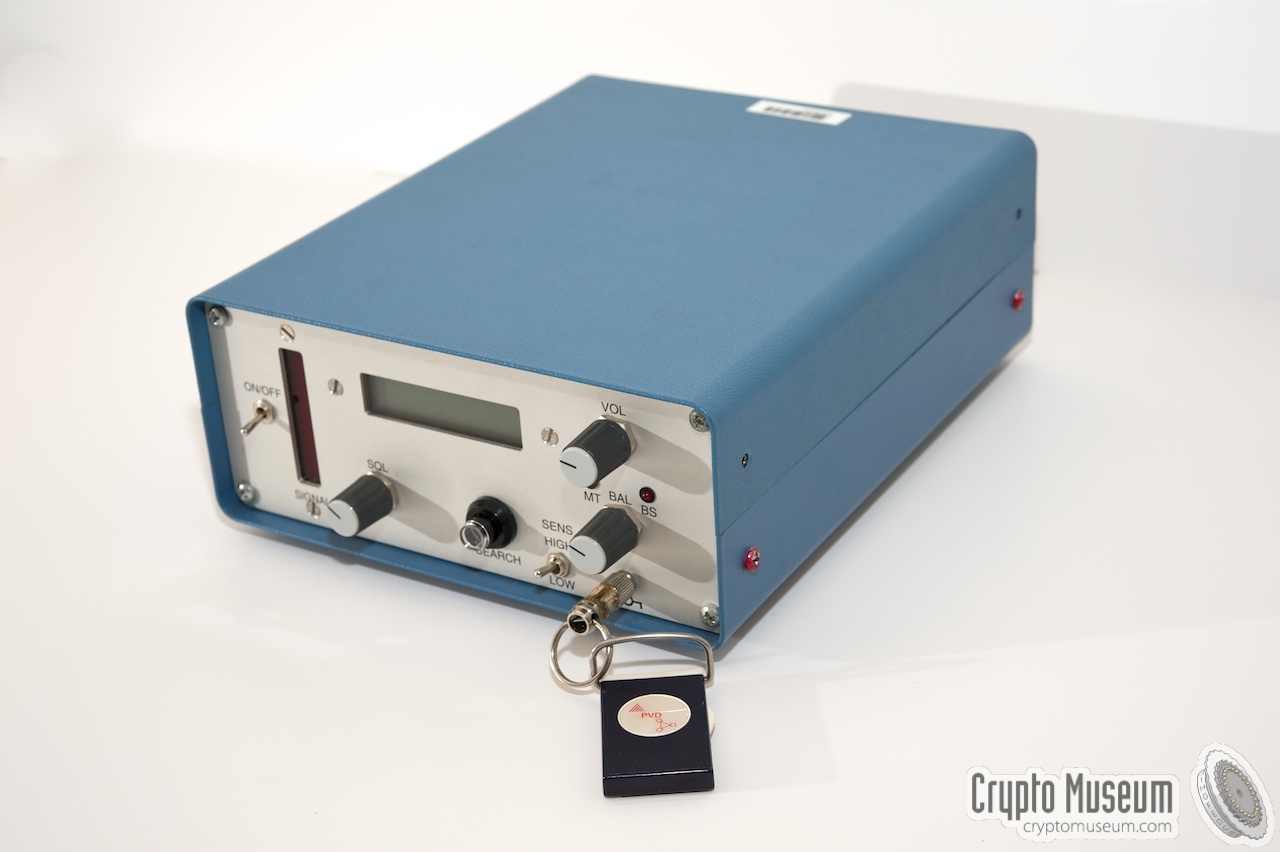
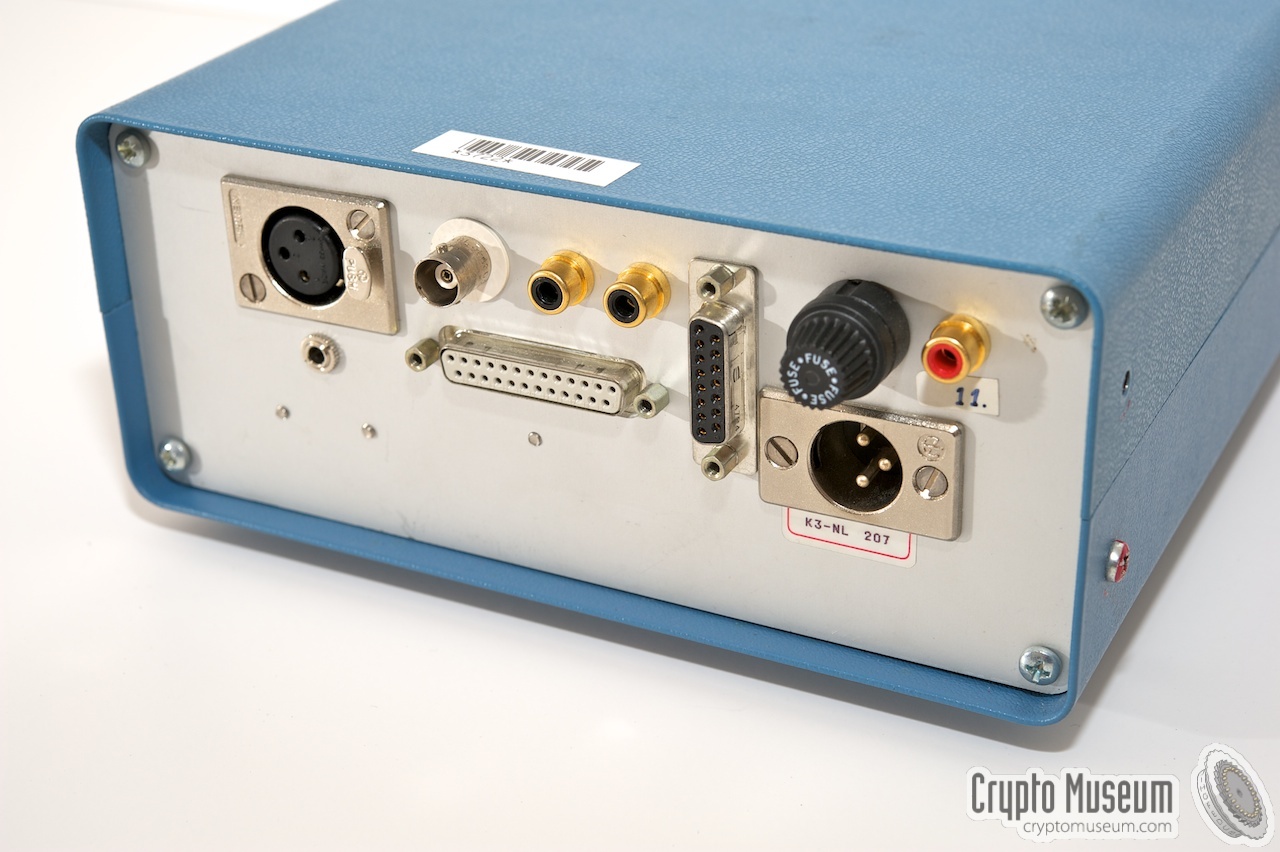
The image on the right shows a Kolibri receiver in its typical blue case.
The unit contains two receivers that are operated in tandem. Once the operator
has found the required mobile phone, Kolibri will immediately search for the
matching base station frequency.
In order to listen to both sides of the
conversation simultaneaously, the user could adjust the balance between
the mobile telephone (MT) and the base station (BS).
|
|
|
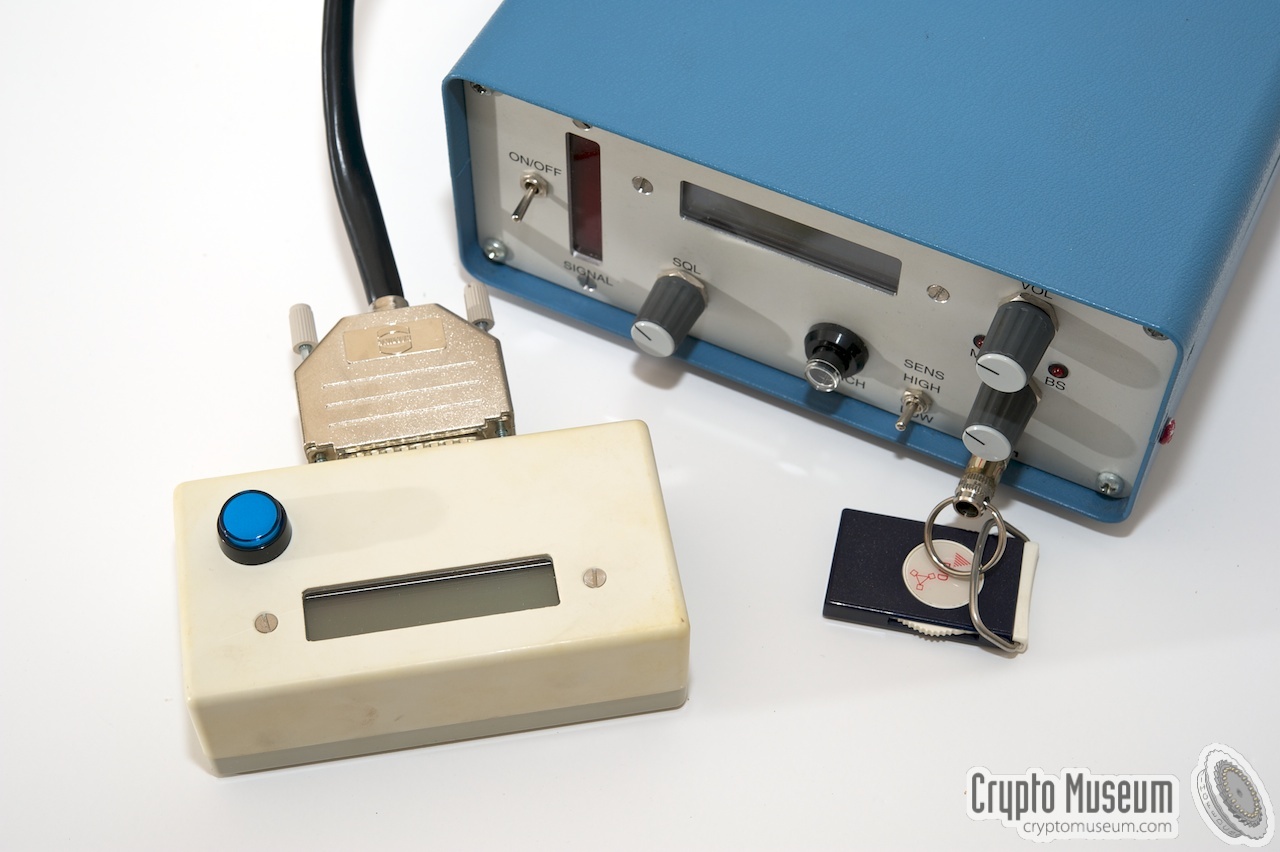
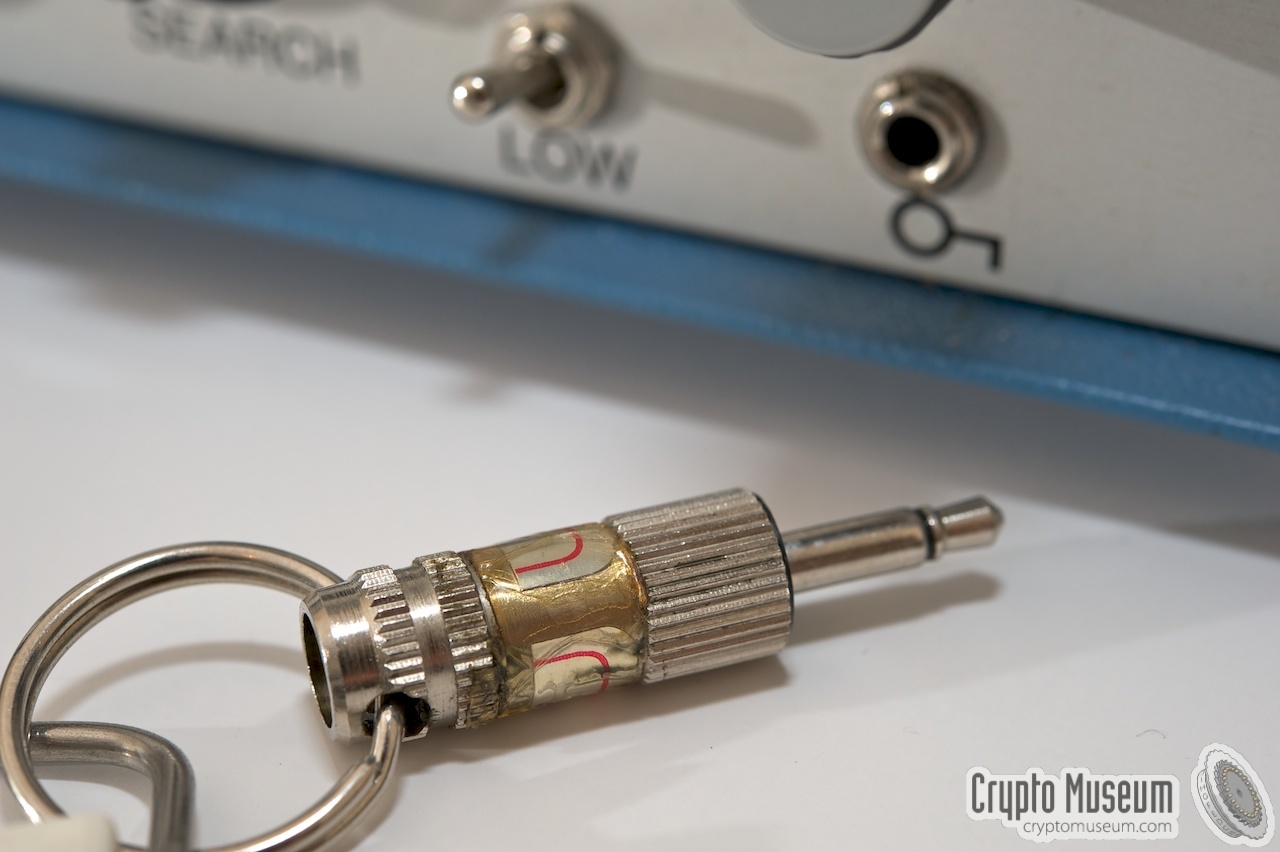
In order to avoid unautorized use of the intercept receiver, a special
key had to be inserted at the bottom right of the front panel.
Although we were not able to open the key, it is most likely that it contains
a Dallas DS-2401 unique ID chip.
|
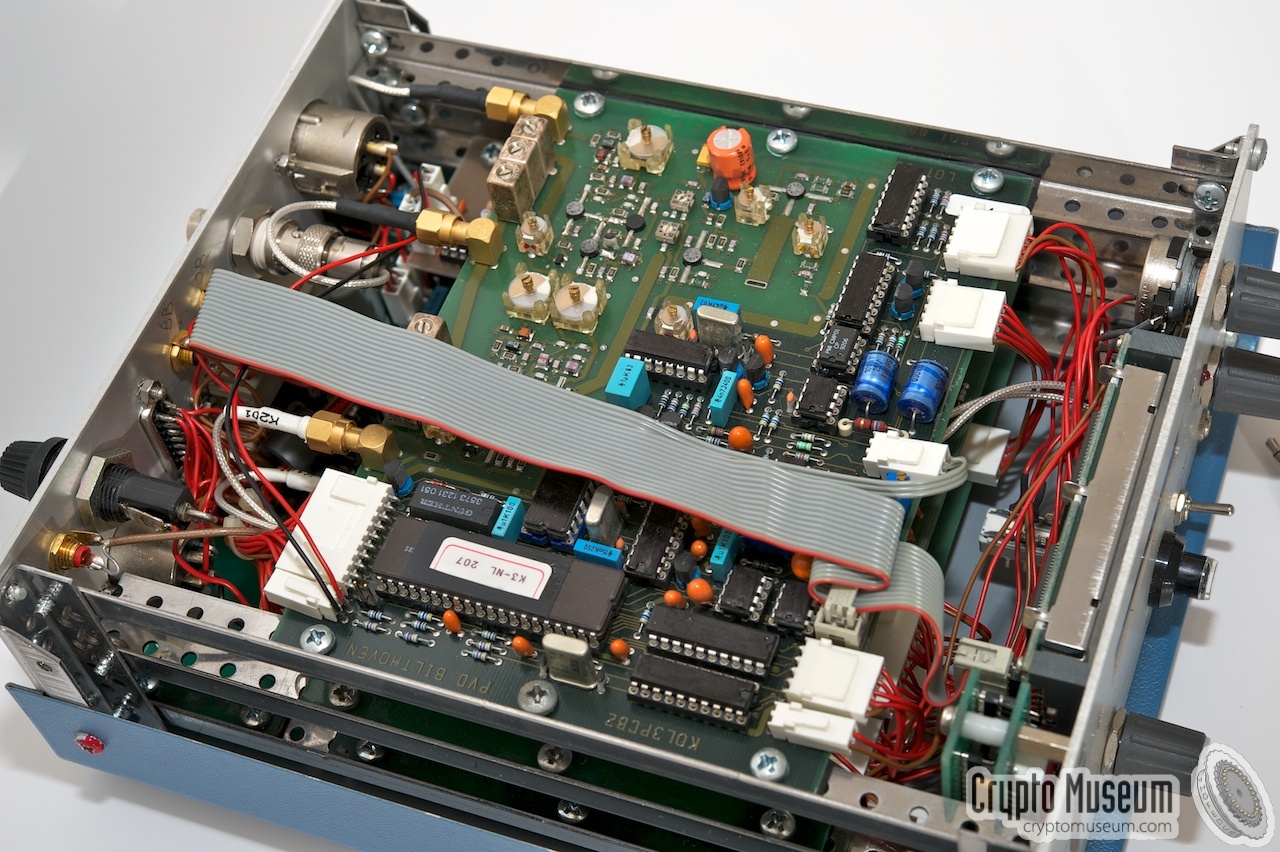
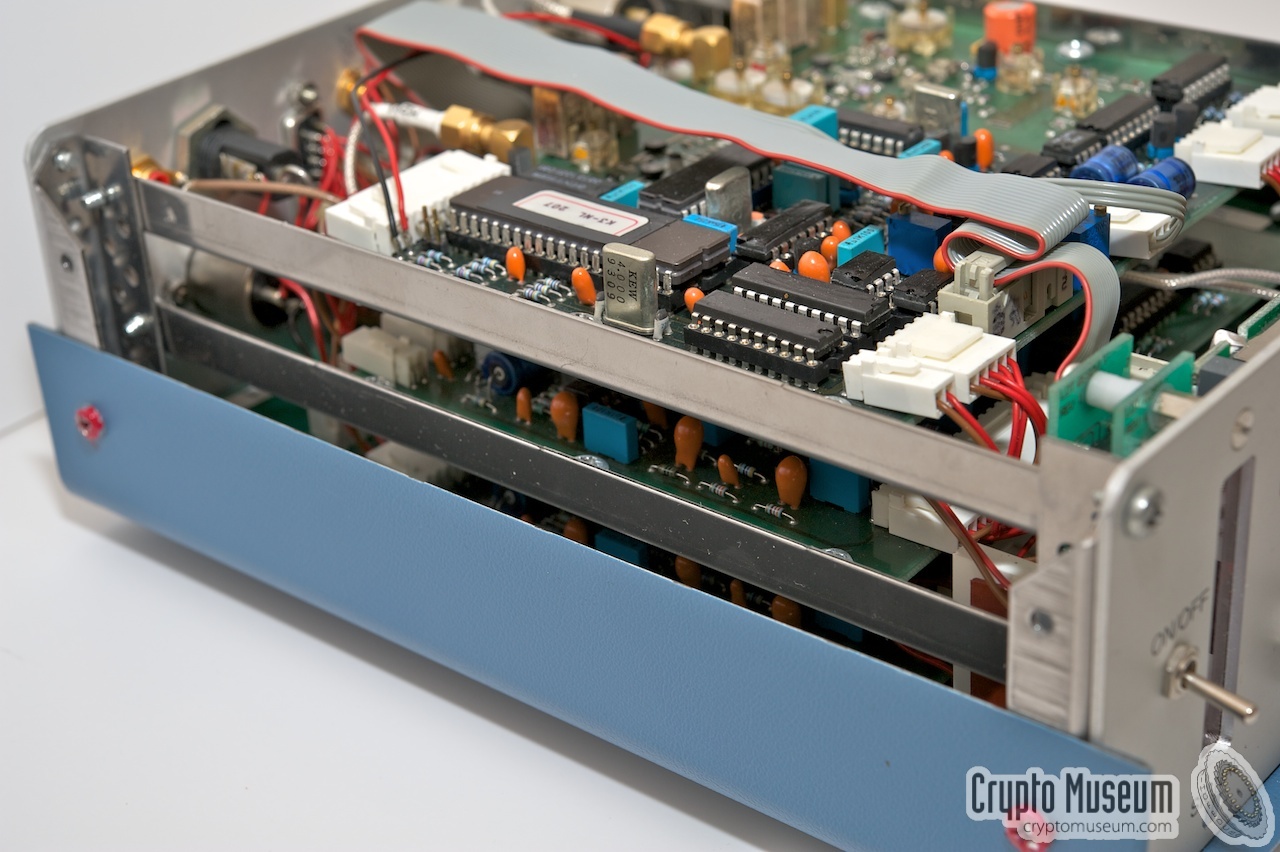
Open the case of the Kolibri, reveals a surprisingly modern electronic design,
considering its age. The unit consists of three large PCBs, mounted above
each other in a frame. An LCD display is used for frequency readout and a large
red LED bar is used as signal strength indicator.
|
Determining the age of the
receiver is rather difficult, as the text has been removed from most of the
ICs. However, the ICs that do carry manufacturing codes, have all been built
in 1991 and 1992, suggesting that the Kolibri was developed in the early 1990s.
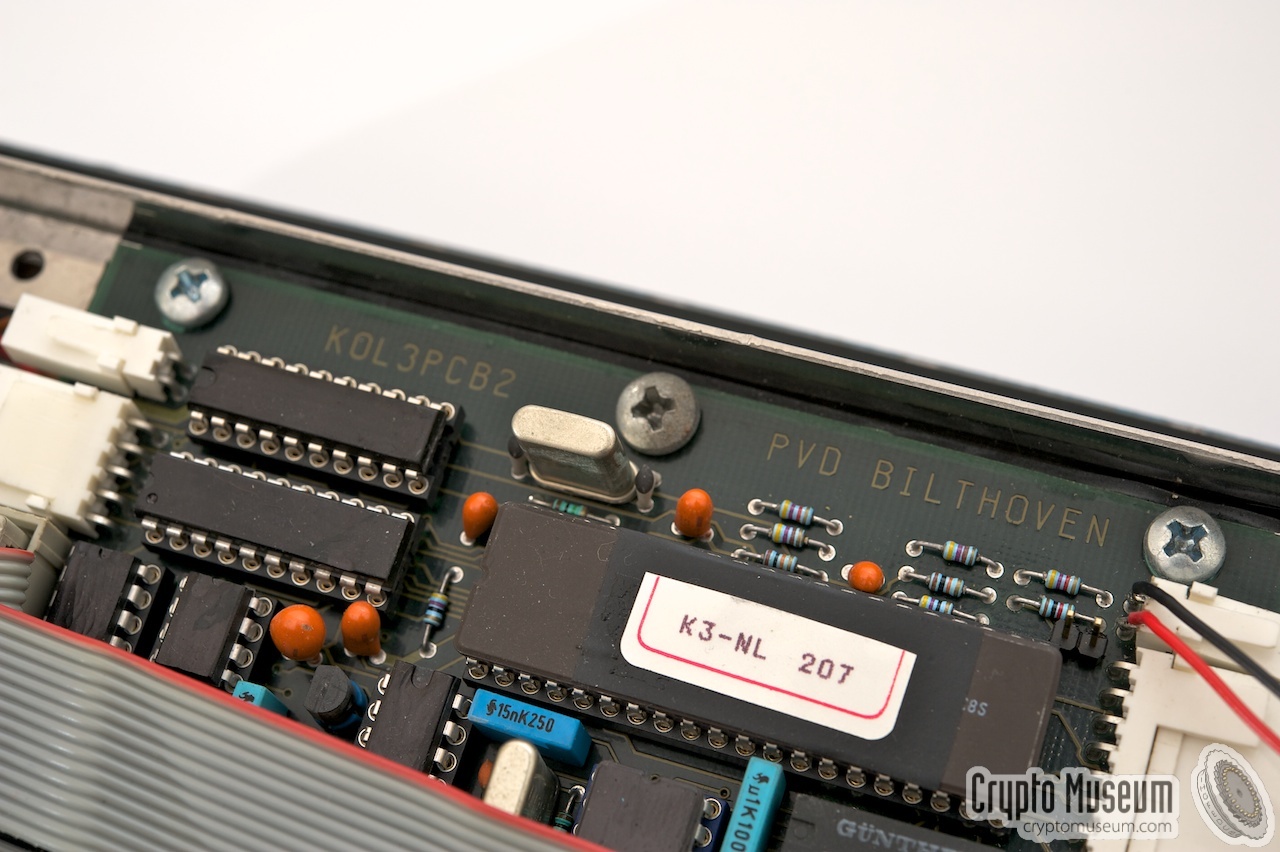
The markings on the edge of the PCB suggest that the receiver was developed
in-house by the PVD in Bilthoven (Netherlands). They also show that
the internal name for the receiver was KOL3. This could mean that it was the
third design, or that it was intended for ATF-3.
|
|
|
|
|
|