|
|
|
|
|

|
|
Covert Intercept TSCM Spy CIA
Miniature pocket AM/FM radio
RF-015, nicknamed Mr. Thin, is a miniature domestic AM/FM radio,
introduced in 1977 by Panasonic (National, Matsushita) in Osaka (Japan).
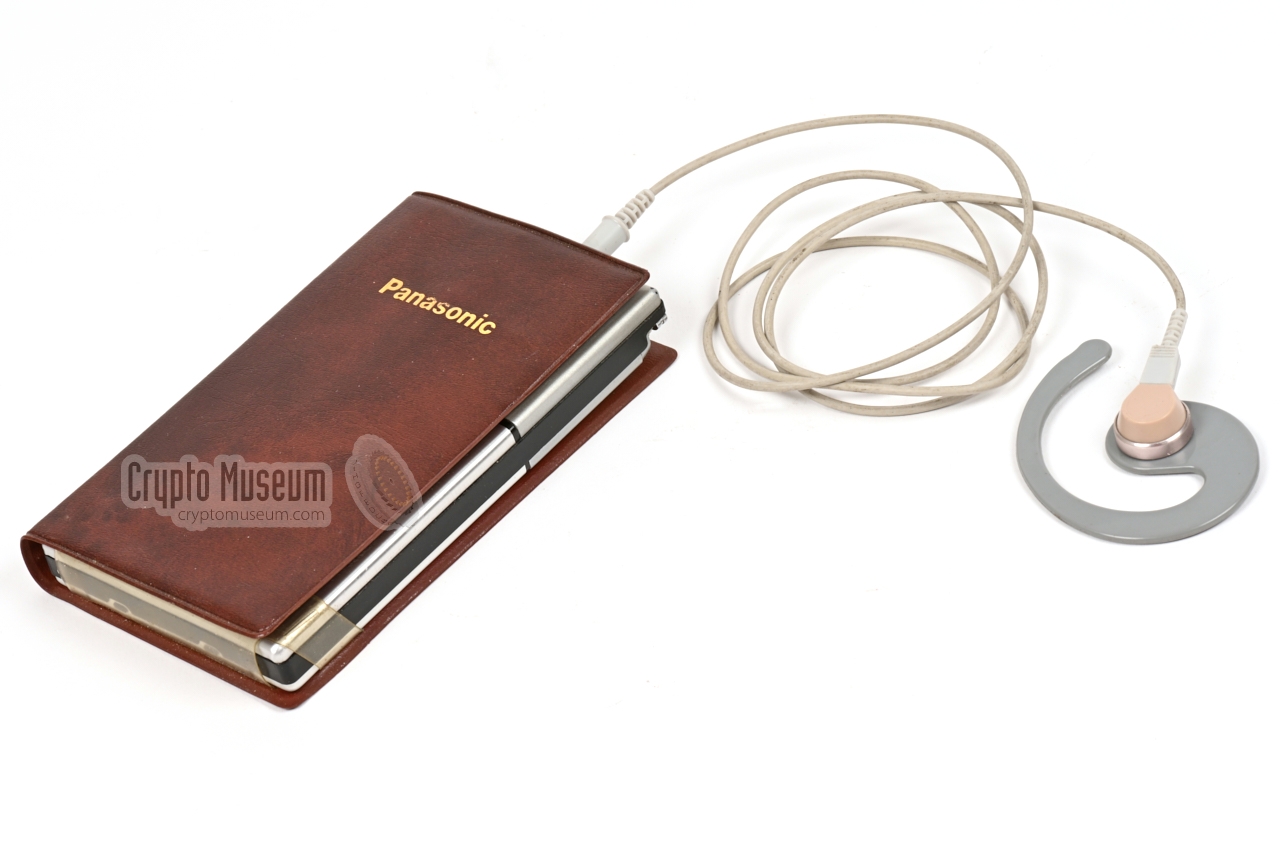
The device was supplied in an artificial leather wallet
that could easily be carried inside the inner
pocket of a coat, looking like un unobtrusive wallet.
The device was succeeded in 1978 by the similar RF-016, that had a built-in
clock.
|
The device measures 127 x 75 x 16 mm and weighs just 176 grams, wallet
and batteries included. Although it was merely a domestic device, Western
intelligence services sometimes used it during the
Cold War as a monitoring receiver,
in particular behind the Iron Curtain
where the upper part
of the VHF-FM band – from 100 to 108 MHz 1 – was commonly used by the
surveillance teams of the intelligence services.
This part of the FM-band was therefore strictly prohibited and was
omitted from the domestic receivers that were available in these countries.
|
|
|
It is known that an RF-015 was used in 1979 by Peter Burke, a case offficer
of the US Central Intelligence Agency (CIA).
Burke had assumed his cover as Second Secretary of the Political Section
of the US Embassy in Warsaw (Poland) in mid-1979, and was under surveillance
by Department II of the Polish MoI and Bureau B of the SB, under
the cryptonym Amon-79 [2].
When Burke was arrested on 18 November 1979 (see below), the Polish
intelligence service SB found an
SSR-100 surveillance receiver under his
clothing, and a Panasonic RF-015 in the inside pocket of his coat,
both tuned to the radio frequencies that were used by the Polish surveillance
teams. During a surveillance detection run (SDR),
e.g. before planting a dead drop or meeting
an informant, Burke used both receivers to ensure that he was black
(i.e. free from surveillance).
|
 |
-
The segment from 100 MHz to 108 MHz was not covered by domestic radios
manufactured in the
Eastern Bloc countries.
The surveillance teams of these countries used it for two-way radio
communication, which was commonly unenecrypted.
|
The image below shows a complete RF-015 kit, as it was used by the
CIA. At the left is the leather wallet in which the receiver
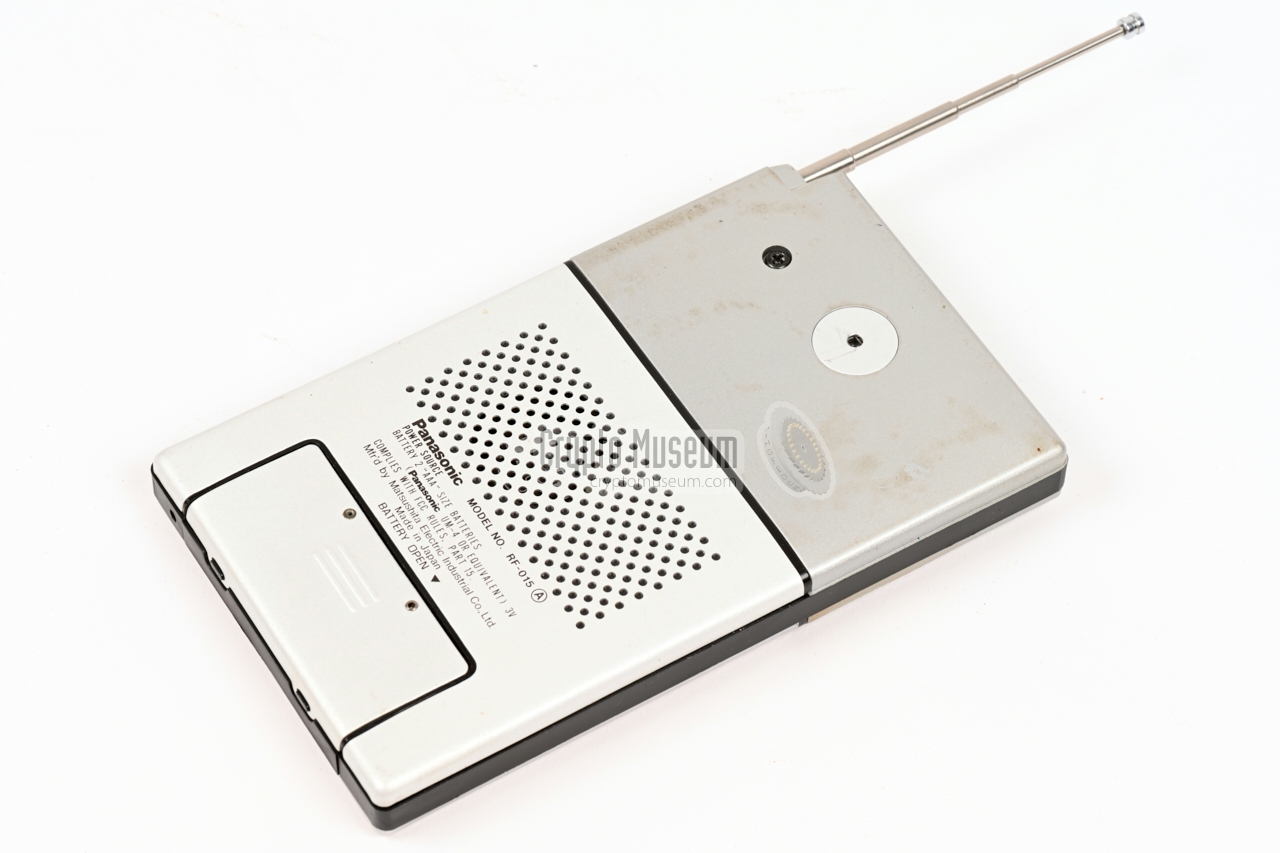
could be stowed. A metal locking button that mates with a hole at
the rear of the receiver prevents it from
falling out of the wallet. At the bottom right is a professional
earpiece with plastic ear-clip,
that replaces the original (cheap) earpiece that came with the radio.
|
The video below was taken by the
Polish intelligence service SB,
following the arrest of CIA case officer Peter Burke on 18 November 1979.
Burke, who had assumed his position as Second Secretary of the Political
Section of the US Embassy in Warsaw a few month earlier,
was known by Polish intelligence by the cryptonym
Amon-79. As the SB suspected him of working for the CIA, he was placed
under surveillance by Department II of the Polish MoI and Bureau B of the SB [2].
In the early morning of 18 November 1979, he was caught red-handed whilst
retrieving a dead-drop that his Polish agent had failed to pick up
on 29 September.
Violating the diplomatic status of Burke's car, the SB — disguised as
police officers — found the dead-drop package under his seat, along with
an SRR-100 receiver, fitted with crystals for the
radio frequencies of Bureau B in the 102 MHz band.
They also found a commercial Panasonic RF-015 pocket radio on him [2].
The SB also made a video of the entire operation, probably for training
purposes, which is now available on YouTube,
complete with an introduction (in the Polish language).
The Panasonic RF-015 radio appears at 41:03.
The CIA's SRR-100 appears at 40:37
and again at 41:39 [3].
|
Original SB footage — I am an American Diplomat [3]
|
|
|
Panasonic's Mr. Thin CIA 'spy' radio
|
|
|
This video gives a nice overview of the evolution of Panasonic's
Mr. Thin radios in the late 1970s and early 1980s, including demonstrations
of the various models. It also highlights the use of the RF-015 by the CIA.
Source
YouTube, Techmoan
Date
2 November 2025
|
|
|
In this video, YouTube user 'sfred' shows how to repair a broken
RF-015 and how to replace its capacitors. Note that this user has
more videos on the repair of Mr. Thin radios from Panasonic.
Source
YouTube, sfred
Date
17 June 2022
|
|
|
- User Manual
- Service Manual
|
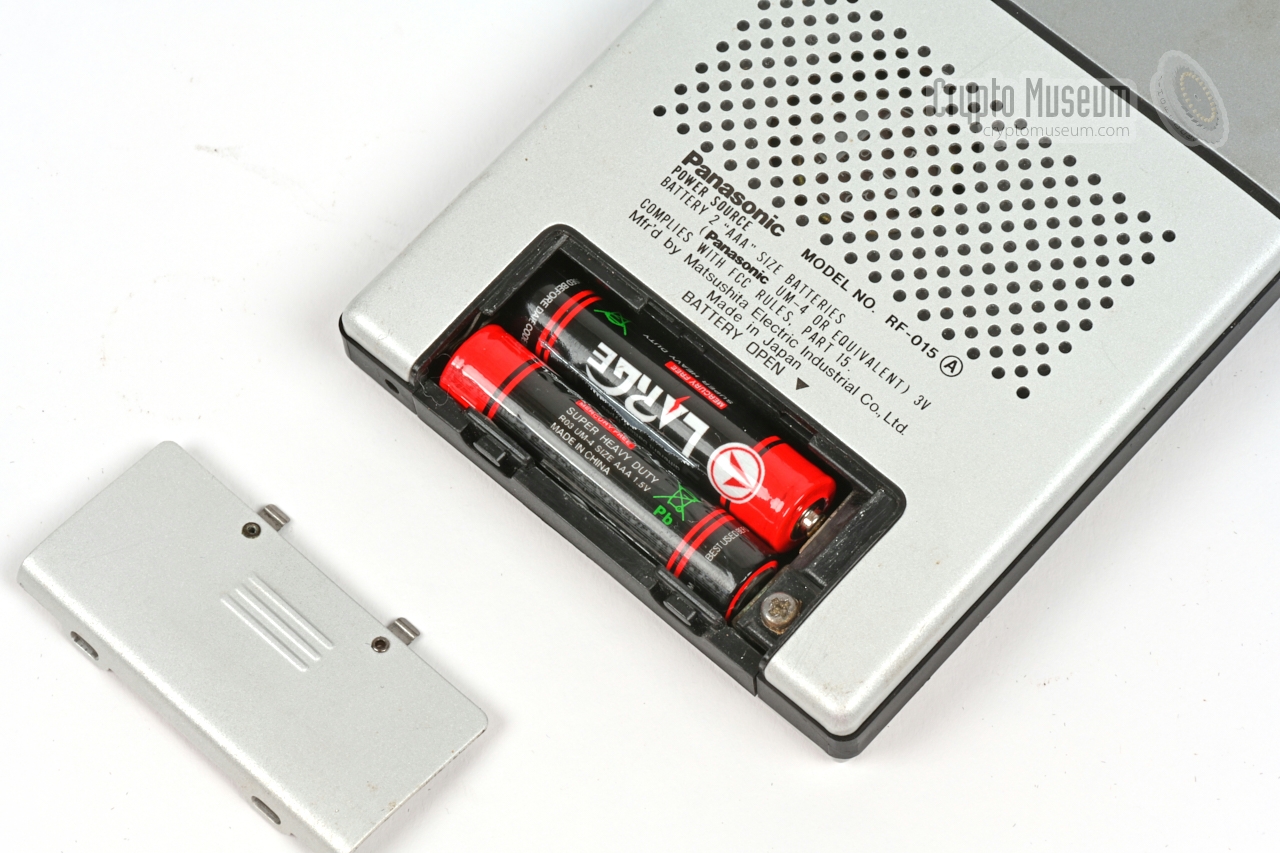
Device Domestic AM/FM pocket receiver Purpose Receiving civil broadcasts, monitoring two-way radio Principle Superheterodyne Model RF-015 Manufacturer Panasonic Year 1977 Country Japan IF 1 10.7 MHz IF 2 455 kHz Transistors 11 Bands 2 (see below) Power 3V DC (2 x AAA-size battery) Output 0.12 W into speaker or earpiece Dimensions 127 × 75 × 16 mm Weight 100 grams (without batteries)
|
520-1730 kHz Medium Wave (MW) broadcast band in AM 88-108 MHz VHF broadcast band in FM
|
|
|
|
Any links shown in red are currently unavailable.
If you like the information on this website, why not make a donation?
© Crypto Museum. Created: Tuesday 17 August 2021. Last changed: Wednesday, 19 November 2025 - 13:14 CET.
|
|

|
|
|